

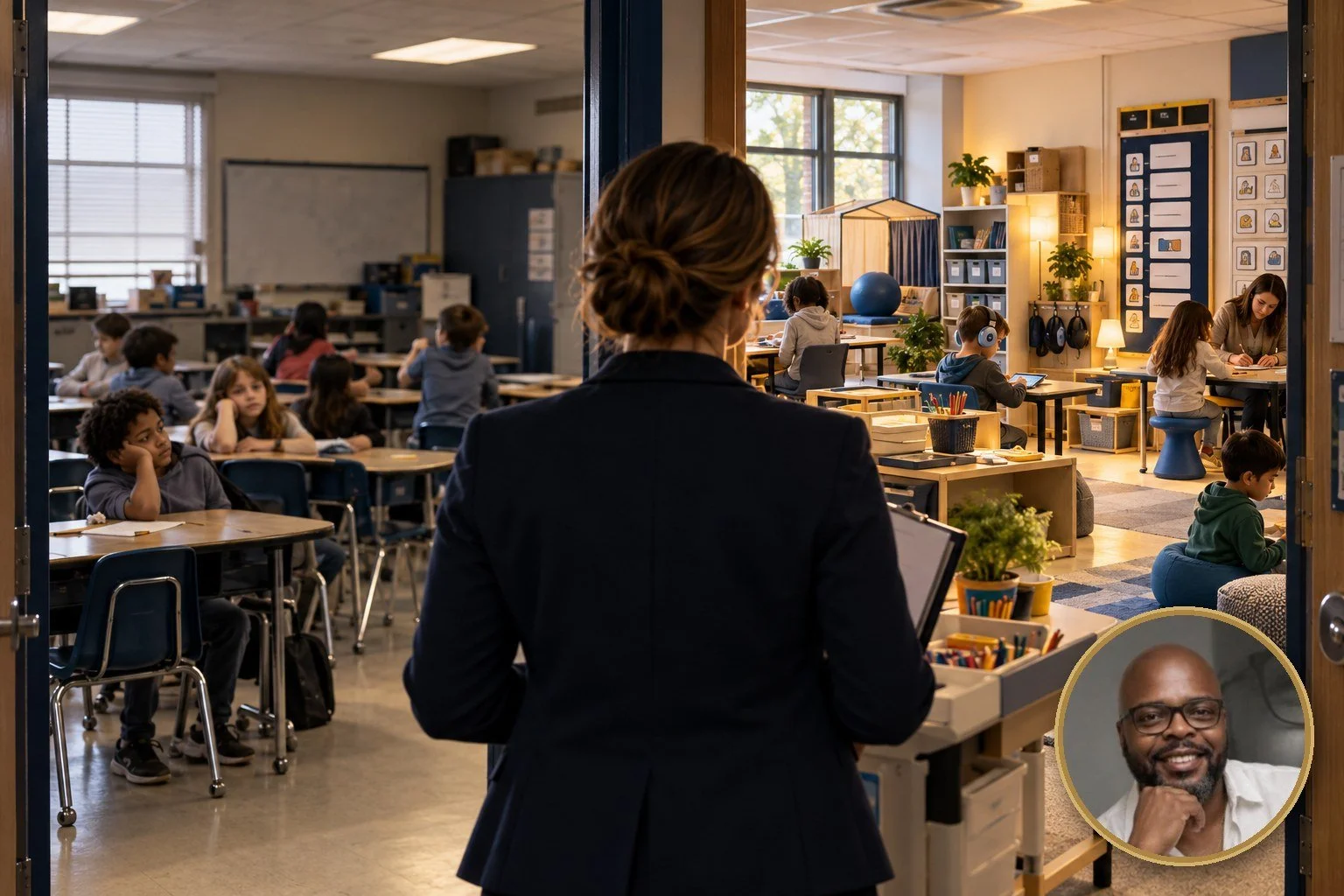
If nobody says a word, I should know what kind of program it is the moment I walk through the door.
One of my longest-running frustrations in special education is watching a district "create a program" by doing little more than finding an empty classroom.
It usually goes like this. The child study team identifies students who need more support than a general education classroom provides. A separate setting is approved. Then the students are placed together in a room, regardless of their very different needs and abilities, a teacher is assigned, and the room is given a name. On paper, the district has a program. In reality, it has a room.
That is not a program. That is far from a program.
The walk-through test
I tell teachers and administrators the same thing every time: if nobody opens their mouth, and no one says a word, I should still know what kind of program it is when I walk through the door.
A real program announces itself. You can see it in how the room is arranged, how the schedule is built, what is posted on the walls, which materials are within reach, how adults are positioned, and what students are actually doing. A program designed for students who need intensive language support looks different from one built for students who need structured behavioral support, which looks different again from one designed around sensory regulation or functional life skills. The design is visible because the design is deliberate.
When I walk into a room and cannot tell what it is for, that tells me something too. It tells me the students were grouped by convenience, not by need.
Why "put them together" fails students
Grouping students simply because they all qualified for a separate setting creates predictable problems. A teacher is asked to deliver very different instruction to students working at very different levels, with different goals, different triggers, and different supports, all at the same time. The result is often a room organized around managing the day rather than teaching anyone in it.
Students who need challenge get worksheets. Students who need structure get inconsistency. Students who need quiet get noise. And the adults, however dedicated, are left improvising a program that was never actually designed.
When a placement does not match what a student needs, behavior often escalates, progress stalls, and the student is blamed for a design failure that adults created.
A program is a compliance issue, not just a quality issue
This is where many leaders underestimate the stakes. Building a deliberate program is not only good practice. It is part of what the law expects.
Under the Individuals with Disabilities Education Act, a student's services and placement are supposed to flow from that student's individualized education program, not from whichever room happens to have open seats. Placement decisions must consider the least restrictive environment appropriate for the student. In New Jersey, the special education code, N.J.A.C. 6A:14, also sets requirements for how special class programs are organized, including how students may be grouped. A room assembled for administrative convenience can put a district on the wrong side of all of that.
In other words, "we put them together and assigned a teacher" is not a defensible answer when a parent, an advocate, or a state monitor asks how the program meets each student's IEP.
What deliberate design looks like
Creating a real program starts with a few honest questions, asked before the first student is placed:
Who is this program for? Define the profile of need it is designed to serve, in plain language. If the answer is "anyone who needs a smaller setting," the program is not defined yet.
What will instruction look like? Identify the curriculum, methods, and supports that match that profile, and make sure staff are trained to deliver them.
How is the day structured? Build a schedule around how these students learn best, not around bus times and lunch periods alone.
How will progress be measured? Decide in advance how the team will know whether the program is working for each student, and when it will reconvene if it is not.
Who decides who belongs here? Placement should follow the child study team's individualized review of each student's needs, not available space.
When those questions have real answers, the room starts to look like what it is. The walls, the schedule, the materials, and the adults all point in the same direction.
The standard
Students placed in separate settings are often the students with the greatest needs and the fewest advocates in the building. They deserve more design, not less.
So before your district announces its next program, walk through the door and stay quiet for a minute. Look around. If you cannot tell what the program is, neither can the students in it.
Build it on purpose. That is what makes it a program, and that is what the law requires.
—
Commentary by Dr. Nacovin J. Norman, Sr. for Puzzles Solutions Group. This essay offers general educational and organizational analysis rather than individual clinical or legal advice. Districts should consult the current text of IDEA, N.J.A.C. 6A:14, and their counsel for specific requirements.